
Response-To-Interview Conversion Rates: Benchmarks For Experienced Professionals
Experienced professionals’ cold outreach averages 3–5% reply rates and 1–3% interview conversions (often under 2% in tech), meaning over 95% of cold emails get ignored and most real openings remain hidden. The key takeaway: generic, volume-based outreach fails - signal-based personalization, LinkedIn engagement (15–25% response rates), and process-driven networking/playbooks are required to access hidden roles and materially boost reply-to-interview outcomes.
Build an Unfair Advantage Proactively and Update Your Job Search Strategy to Today's Job Market.
$197
Learn MoreWhy Less Than 5% Of Cold Outreach Converts To Interviews: The Untold Cost For Experienced Professionals
Cold outreach reply rates for experienced professionals average just 3–5%, with interview conversions stuck at 1–3% - and in tech, often below 2%. That means over 95% of cold emails get ignored. Hours vanish. Energy drains.
These odds shape everything. Rely on job boards or spray-and-pray emails? You’re fighting over scraps. Most real openings never reach public listings. The competition isn’t visible - it’s silent, behind closed doors.
The numbers look grim for a reason. Inbox fatigue, automation, and generic outreach have trained decision-makers to ignore most pitches. Response rates for generic emails hover at 1–3%. Signal-based personalization - referencing company news, leadership changes, or recent funding - pushes reply rates up to 15–25%, but few take the time. The difference isn’t luck. It’s process and precision.
Every ignored message costs more than time. Missed replies mean missed access to hidden roles, the kind filled through networks and backchannels. If your approach isn’t sharp, you’re invisible where it counts.
To shift the odds, use process-driven tools: proactive networking playbooks and reply-handling systems. Volume alone won’t win. Precision does. Want to move beyond job board scraps? Build a system that fits today’s speed and standards.
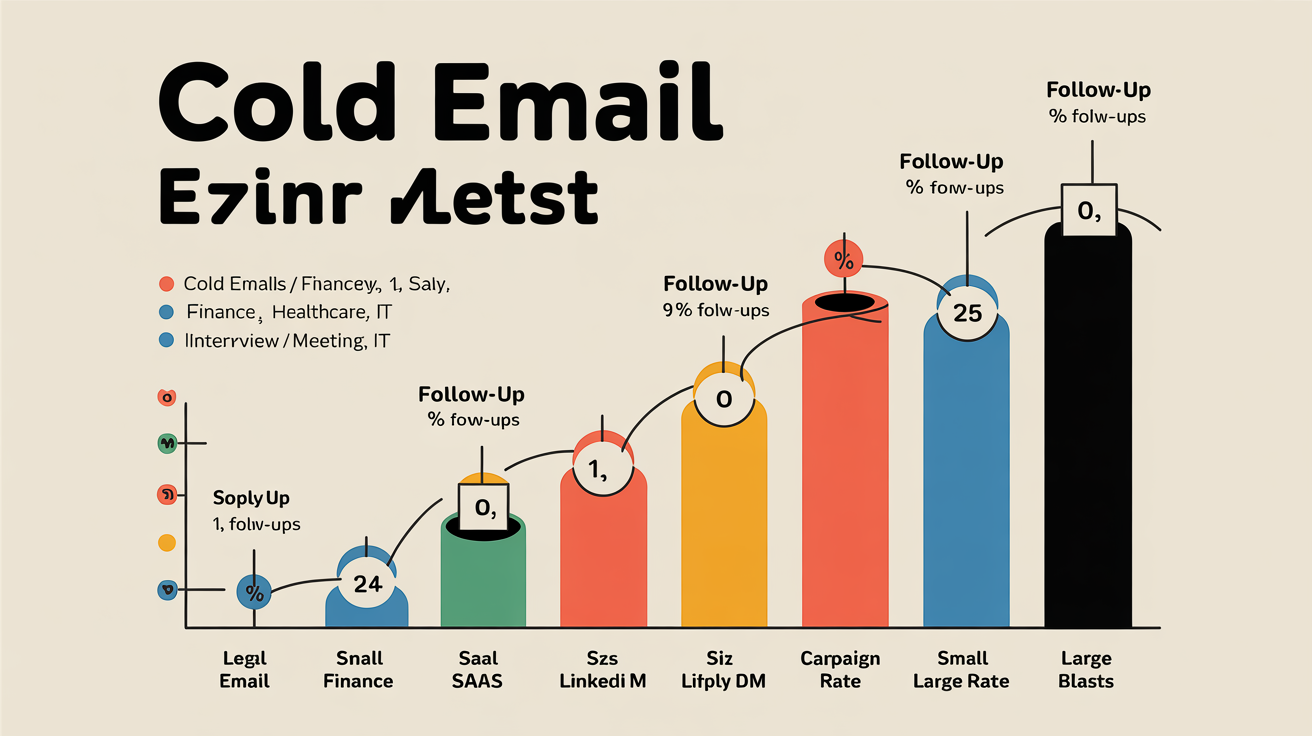
Breakdown: Industry-Specific Response And Interview Conversion Rates For 2026
Legal services lead the field in cold outreach - 2026 data puts reply rates just above 10%, more than twice the global average. SaaS, finance, and tech barely cross 5%. But even in the best-performing sectors, fewer than 2% of cold messages turn into interviews or real meetings. The gap between replies and real opportunities is wide.
Industry Benchmarks: Who Gets Replies?
- Legal services: 10–12% reply rate - Decision-makers in law read and respond. Relationship-driven cycles, high trust, and a preference for customized outreach. Generic blasts get ignored.
- SaaS and IT: 3–5% reply rate - Heavy saturation. Automation and templated outreach dominate. Personalization is the only way to break through.
- Finance: 4–6% reply rate - Slightly ahead of tech, but inboxes are still tough. LinkedIn DMs edge out email, but not by much.
- Marketing and recruiting: 6–8% reply rate - Crowded inboxes, but this group rewards relevance. Reference recent work or mutual contacts to beat the average.
- Manufacturing/distribution: 2–4% reply rate - Lowest engagement. Buyers respond only to messages that show clear understanding of their needs.
Law firms respond because business flows through trust and referrals. Tech lags - too much untargeted outreach. These numbers reflect sector habits and pain points, not luck.
Cold Email vs. LinkedIn: Channel Matters
LinkedIn outperforms email for high-value, relationship-driven roles. Cold LinkedIn messages average 15–25% response rates - triple or more compared to cold email’s 3–5%. Context matters. On LinkedIn, recipients see your face, work history, and connections. Email is faster at scale, but gets lost in crowded inboxes. In SaaS and tech, LinkedIn breaks the noise - email alone rarely does. Using both channels together boosts response by over 40% compared to single-channel outreach.
Meeting/Interview Conversions: The Real Measure
Replies mean nothing if they don’t lead to conversations. For most campaigns, only 1–2% of cold messages result in a booked meeting. Hand-built, smaller lists with high personalization can push that to 3–4%, but that’s rare. Most SDRs and job seekers overestimate this step - assuming a reply equals progress. The drop-off is steep. Focus on the reply-to-meeting pipeline, not just reply numbers. For tactical playbooks on moving from reply to meeting, see reply-handling systems.
The Follow-Up Sequence Advantage
Persistence changes outcomes. 2026 data shows structured follow-up sequences lift conversions by 49–65% over one-shot outreach. Yet nearly half of candidates never send a second message. Best-in-class campaigns use 3–4 touchpoints, spaced 2–5 business days apart, each message different. More at Designing Follow-Up Sequences That Reclaim Lost Opportunities.
Timing and Personalization: Small Tweaks, Big Impact
Monday and Tuesday afternoons, around 1PM local time, deliver the highest open and reply rates. Personalization - mentioning a prospect’s promotion, funding, or recent news - can push reply rates to 15–25% in any industry. Spray-and-pray tactics flop. Context wins. For methods to scale personalization, see How To Scale Personalized Outreach Without Losing The Human Touch.
Beyond Stats: What Separates Top Performers
The top 10% don’t rely on luck. They target precisely, keep lists clean, and do their research. Verified, hand-built lists double reply rates compared to scraped or outdated data. If your numbers lag, it’s rarely just messaging. It’s process. For repeatable, high-yield campaigns, use the proactive networking playbook. Tight lists, smart sequencing, and fast reply handling win. Don’t let warm leads sit idle.
What The Numbers Actually Mean For Your Job Search Strategy
Chasing huge lists tanks your conversion rate. Campaigns with 50 handpicked targets convert 2.8x higher than blasts to 500+. If your reply rate sits below 3%, copy isn’t the problem - targeting or technical issues are. The numbers are clear: relevance and consistent follow-up drive results, not sheer volume.
Small, Handpicked Lists Outperform Spray-and-Pray
Belkins’ 2026 benchmarks confirm it: curated lists of 50 get nearly triple the conversion rates of mass campaigns targeting 500+ contacts. Reply rates for tight, hand-built lists land in the 8–12% range. Mass sends barely crack 3%. That gap isn’t luck. It’s the effect of only targeting people who actually fit your criteria. Every name on your list matters. You cut noise, so each message pulls its weight. If your numbers lag, fix your targeting before touching your copy. For step-by-step methods, see our research and qualification framework for finding high-fit contacts efficiently.
Conversion Is a Process: Qualified Replies Over Vanity Metrics
Most track reply rates obsessively, but not all replies move you forward. Benchmarks set a 5–8% reply rate, but only 20–30% of those become real conversations. That’s why top performers focus on qualified replies - real interest, next steps, or referrals - not just any answer. Tracking these signals keeps your strategy honest and signals when to change tactics or lists.
Follow-Ups Multiply Results - One Email Isn’t Enough
- Campaigns with 3–4 touchpoints get up to 65% higher conversion than single-email blasts (2026 data).
- Half of positive replies come in follow-ups, not the first message.
- Best timing: 2–5 days between messages, adjusting based on recipient behavior and engagement.
- Each follow-up needs a new angle - proof, insight, or a common mistake - not just a repeat ask.
If you stop after one message, you’re missing more than half your potential replies. For proven frameworks, check Designing Follow-Up Sequences That Reclaim Lost Opportunities.
Technical Mistakes Kill Campaigns Before They Start
Low reply rates often signal upstream issues. Inactive, unverified, or poorly segmented lists cripple deliverability. So do broken SPF/DKIM records or sudden volume spikes. Providers flag poor engagement, push your emails to spam, and damage your reputation. Keep bounce rates under 2%, spam complaints under 0.1%, and monitor every send with real-time analytics. Our measurement and testing system covers the technical checks that top performers never skip.
Relentless Iteration Beats Static Playbooks
Top campaigns never run autopilot. They iterate - on timing, copy, targeting, and technical setup - using live campaign data to drive every pivot. Testing send times, subject lines, and angles shows what actually works. If your results stall, use the proactive job search playbook to tighten your strategy and build repeatable wins.
Volume gets you seen. Precision and process get you hired. For reply-handling systems, reference our playbook for moving replies to meetings.
2026 Trends: The End Of Spray-And-Pray And The Rise Of Precision Outreach
Volume-first cold email is fading fast. Multichannel, micro-targeted campaigns are outpacing single-channel blasts. Sequences mixing email and LinkedIn are now delivering reply rates two to three times higher than email alone. The top campaigns use two or three channel-specific touches - each one targeted, never generic. That drives up to 65% higher replies and a sharper pool of qualified conversations.
Multichannel Sequences Overtake Single-Channel Blasts
This shift is backed by hard data. Campaigns using both LinkedIn and email report up to a 3x jump in reply rates - moving from about 3% to 9% on average. Social sellers who add LinkedIn are 51% more likely to hit targets, and 45% generate more high-quality opportunities (SuperOffice, 2026). The most effective sequence: view a LinkedIn profile, send a connection, then follow with a personalized email. If silence follows, a quick DM seals the loop. Automation tools now sync these steps. Real-world sequencing? See our proactive job search playbook.
Email Deliverability Gets Tougher - and Technical Setup Is Non-Negotiable
Email-only campaigns using templates are getting hammered by stronger spam filters. Bounce rates over 2% or complaint rates above 0.1% can get your domain throttled. By 2026, inbox placement relies on sender reputation, SPF/DKIM records, and engagement stats. Drop below a 30% open rate and expect to hit spam. Multi-channel strategy now acts as insurance. LinkedIn touches warm up prospects - improving both delivery and reply rates. Want technical tactics? See How We Measure Outreach Performance And Run Tests That Improve Reply Rates.
Personalization at Scale Outperforms Automation Alone
Personalization isn’t optional - 2026 benchmarks show 6x higher transaction rates for tailored emails versus generic. LinkedIn messages that reference recent activity, shared interests, or company news drive response rates up by 28–41%. Mass automation with zero research gets flagged and ignored. The best candidates now research companies and hiring managers before reaching out. Skip segmentation and message-level personalization, and you’re invisible. For proven tactics, use our guide to scaling personalized outreach without losing the human touch.
Analytics-Driven Iteration Is the New Baseline
Job seekers now run A/B tests on subject lines, CTAs, and timing - and track reply quality, not just volume. Outreach has become a live campaign, not a static checklist. Early signals: even mid-level candidates are using CRM-level analytics and reworking sequences based on real reply data. Some tools - like One Cold Email - offer analytics and repeatable frameworks, but the research and targeting still fall on you.
If you’re not tracking outcomes at every step, you’re guessing. For details on reply-handling and follow-up, see how we coach replies into interviews and offers.
Early Signals: Messenger Apps and Community-Building
Messenger outreach (WhatsApp, Telegram, Slack) is starting to show up in specific geographies and verticals. In Eastern Europe and tech, late-stage follow-ups through messengers see higher response rates, but volume remains low. Community-driven outreach - think shared Slack groups or niche forums - is another early signal, especially for network-heavy roles. For most, though, LinkedIn and email are still driving the bulk of outreach in 2026.
Precision, personalization, and measurement now compound. Generic blasts get ignored. For targeting frameworks, see how we research and prioritize companies to find hidden hiring opportunities.
Mastering Targeted Outreach Doubles Your Interview Rate
Less than 5% of generic outreach gets you an interview. Targeted, sequenced campaigns double or even triple that rate. Persistent, relevant follow-up is what separates being ignored from booking interviews.
The data is clear. Job seekers who research, personalize, and iterate across multiple channels leave “spray and pray” behind. Precision and smart follow-up drive conversions - not blasting more inboxes. A systematic approach that tracks every touchpoint and adapts each campaign is now table stakes. For practical details, see how we coach replies into interviews and offers.
Benchmarks are your navigation tools. Use them to shift focus from volume to relevance. Build repeatable systems that convert. For step-by-step frameworks, start with our complete playbook for proactive outreach or see how we measure outreach performance and run tests that improve reply rates.
Build an Unfair Advantage Proactively and Update Your Job Search Strategy to Today's Job Market.
$197
Learn MoreFrequently Asked Questions
How do I calculate my personal response-to-interview conversion rate and compare it to the industry benchmarks?
Calculate: Conversion rate = (number of interviews booked ÷ number of positive responses received) × 100, measured over a recent window (e.g., last 3–6 months) and excluding automated rejections or non‑relevant messages. Compare to benchmarks: a healthy responses→meetings benchmark is 40–60% (meeting show rates 75–85%), while platform/interview-response context varies - Indeed ≈20–25% response, LinkedIn 3–13%, company sites 2–5%; timing can move interview odds from ~3% (poor timing) to ~13% (Tue–Thu mornings, applications within 48–96 hours). If you’re under ~40%, focus on clearer qualification and stronger reply messaging and confirmation sequences; above ~60% indicates strong qualification and outreach.
What follow-up cadence and number of outreach touchpoints reliably increase interview conversions for senior/experienced candidates?
Use 4–5 touchpoints (initial outreach plus 3–4 follow-ups) over about 3–4 weeks; research finds 3–5 message sequences produce the best responses and a 4–5 email sequence can double replies and raise interest by ~68% versus one-offs. Timing: send the first follow-up 2–3 days after the initial email (avoid next-day follow-ups which reduce replies by ~11%), then around Day 8, Day 15 and a final breakup/final touch around Day 28. Personalize every message and vary the value (new angle, case study, social proof or specific compliment); space later touches farther apart to signal persistence without pressure for higher interview conversion among senior candidates.
How can I scale signal-based personalization (mentioning funding, leadership changes, product news) when targeting 50–200 companies without losing quality?
Tier accounts and systematize modular research: hyper-personalize the top ~50 manually and automate the next 150 with templates that insert 2–3 verified signals (recent funding, leadership change, product launch) tied to mapped micro-personas. Limit bespoke content to ~20% of each message (Donovan’s finding), use enrichment sources (Crunchbase for funding, LinkedIn for hires/leadership, company press pages for product news) plus sequence tools (Salesloft/Outreach) and AI drafts with mandatory human edits. AB-test new hooks on ~100-prospect cohorts before scaling, enforce quality with spot audits, response-rate KPIs, and a centralized “value bank” of role-specific proof points and outcomes.
Which subject lines, opening sentences, or message structures have been shown to lift reply-to-interview conversion for experienced professionals?
Use short, question-style subject lines and a tight message structure: a one-line personalized opener referencing a recent accomplishment or company fact, one line that triggers curiosity or offers quick value/peer proof, and a single clear CTA (e.g., “15-minute call next week?”). Evidence: Snow & Youshaei found “Quick Question” captured 66.7% of replies versus 33.3% for a long subject line, and a 600+ template test showed “Next steps” achieved ~70.5% opens and ~49.6% replies; plus 92% of people trust peer recommendations, so include brief social proof. Keep subject lines ≈1–5 words, thread follow-ups consistently, and A/B test with simple CRMs/trackers to improve reply-to-interview conversion.
What specific KPIs and metrics should I track in an outreach playbook to diagnose where conversions are failing and improve them?
Track deliverability and engagement (send/bounce rate, open rate, click‑through rate, unsubscribe rate, reply rate, positive‑reply rate), funnel conversions (sequence‑step response rate, meeting‑booking rate per touch, opportunity creation rate, SQL conversion rate, stage‑by‑stage conversion %, and average days in each stage/sales‑cycle length), activity efficiency (touches-per-conversion, call connect rate, voicemail left rate, objection‑to‑appointment conversion, time spent on objection handling, time‑to‑first‑reply) and outcome/value metrics (win rate, average deal size, pipeline velocity, revenue per campaign, LTV/churn), all segmented by persona, channel, campaign and rep. Also instrument landing‑page engagement (views, CTA clicks, form completion rate, scroll depth), A/B test lift and cohort trends; set alerts for sudden drops in open/reply or stage conversion rates to diagnose whether failures stem from deliverability, messaging, targeting/cadence, landing pages, or rep execution and then run controlled experiments on the weakest step.
What tools or integrations (email + CRM + calendar) are best for automating reply-handling and reducing friction between a positive reply and scheduling an interview?
Use a CRM-aware scheduler + an email-sequence tool and a zap/automation layer - e.g., Chili Piper (instant “book now” in email + Salesforce/HubSpot integration) or Calendly (Google/Outlook calendar + Salesforce/HubSpot integrations) paired with HubSpot Sequences or Outreach/SalesLoft to detect positive replies and surface booking links automatically. For interviews specifically, use ATS-aware schedulers like GoodTime or Chili Piper integrated with Greenhouse/Lever to run round-robin assignments, auto-send video links and calendar invites, and use Zapier/Make to parse inbound replies and trigger the booking flow.
Tactically, how do I identify and reach the hidden decision-makers or internal champions who actually fill roles - rather than contacting generic job posters?
Map the hiring chain first: use LinkedIn (search “VP/Director [function] at [company]”), company leadership pages, press releases and org-chart tools or databases (Sales Navigator, ZoomInfo, RocketReach) to get names and titles. Reach them through warm channels - ask mutual connections for an intro, or send a concise LinkedIn/email noting a recent initiative or their new role and requesting a 15‑minute “help me understand” call while offering one specific idea you’d bring. Parallel that with targeted recruiter relationships and outreach to current team members or alumni who can become internal champions, and time contact around leadership changes, funding rounds or budget cycles when hiring windows open.
Luis Gamardo built a modern job search framework for a broken recruiting system. His approach teaches how to send cold emails at every stage of the hiring process, so qualified candidates can get noticed by the right people at the right time - including before jobs are even posted.
Sources
- trykondo.com
- autobound.ai
- isazeni.com
- community.hubspot.com
- artemisleads.com
- woodpecker.co
- instantly.ai
- herohunt.ai
- fyxer.com
- tradepressservices.com
- careerlaunchpad.io
- remote4africa.com
- instantly.ai
- chatterworks.com
- artisan.co
- quora.com
- mailforge.ai
- askamanager.org
- allegrow.co
- instantly.ai
- joinhandshake.com
- salescaptain.io
- sales-mind.ai
- saleshandy.com
- executivestrategygroup.com
- donemaker.com
- fishmanafnewsletter.com
- clearout.io
- martal.ca
- senseicopilot.com
- abstraktmg.com
- nutshell.com
- cleverly.co
- prospeo.io
- saleshive.com
- skylead.io
- salesrobot.co
- trykondo.com
- preplounge.com
- linkedsavvy.com
- instantly.ai
- gmass.co
- meetalfred.com
- salesforge.ai
- support.outreach.io
- mailforge.ai
- mailforge.ai
- warmforge.ai
- hubsell.com
- instantly.ai
- mailtrap.io
- primeforge.ai
- aisdr.com
- help.lemlist.com
- saleshandy.com
- knowledge.hubspot.com
- 4sitestudios.com
- litmus.com
- nethunt.com
- expandi.io
- lemlist.com
- herohunt.ai
- joinvalley.co
- sendr.ai
- theroundpie.com
- botdog.co
- leadspicker.com
- outreach.io
- gtmnow.com
- listkit.io
- upwork.com
- pursuenetworking.com
- gem.com
- gem.com
- findem.ai
- sparkle.io
- trykondo.com
- indeed.com
- careervillage.org
- indeed.com
- levelingup.com
- tryapt.ai
- saleshandy.com
- resources.workable.com
- writemail.ai
- instantly.ai
- intervue.io


