
Follow-Up Sequence Checklist: When To Stop And What To Do Next
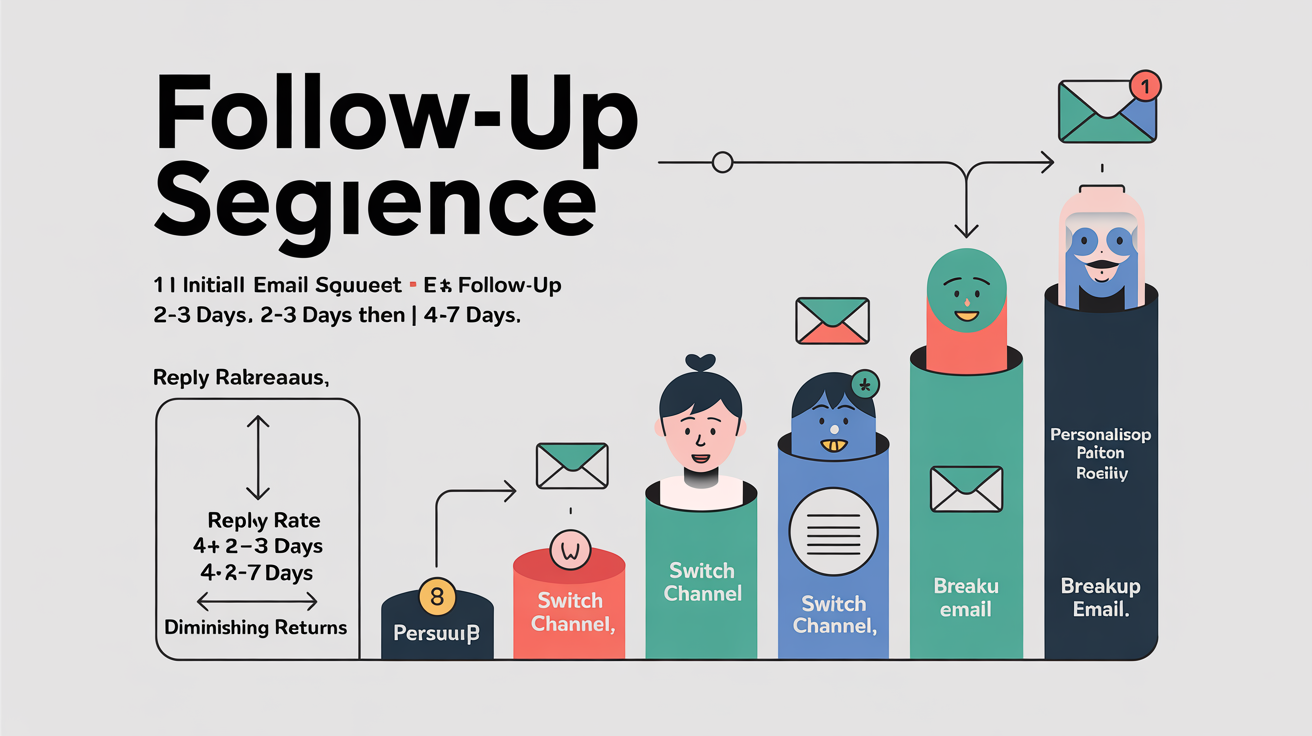
Over half of cold outreach replies come from follow-ups, yet 70% of job seekers send only one message, forfeiting interviews and unposted roles. Most important takeaway: use a data-backed sequence - one baseline template plus 2–4 short personalized follow-ups (start 2–3 days, then 4–7 days), track engagement, and cap at four touches.
Build an Unfair Advantage Proactively and Update Your Job Search Strategy to Today's Job Market.
$197
Learn MoreMissing the Follow-Up Line: Why Job Search Sequences Fail (and What It Costs You)
Over half of all replies in cold outreach come from follow-up emails, not the first message. Yet 70% of job seekers send one note and vanish - leaving behind interviews and offers they’ll never see. That’s thousands lost, not just in salary, but in the jobs that never even get posted publicly.
This checklist is for job seekers who won’t settle for the black hole of online applications. It’s for mid-career professionals targeting hidden roles, career changers breaking into new industries, and anyone tired of recruiters disappearing. You’ll use a process that gets replies before others even see a job listed - turning silence into real conversations with decision-makers.
Every step breaks down the job search sequence into what actually works: precise timing, follow-ups that add value, and message structures that get read instead of flagged as spam. Each tactic is field-tested and maps to the outreach systems top performers use. For specifics on designing these sequences, see this guide to follow-up sequences. To build your full proactive search, start with the complete playbook for proactive job outreach.
What Actually Works: Data-Backed Timing, Limits, and Triggers for Follow-Up
Effective outreach isn’t about chasing endlessly. It’s about sending targeted value at proven intervals, then stopping before you cross into diminishing returns. Four to five touches capture nearly all the extra replies you’ll get - after that, response rates barely move. The difference? Every message is triggered by real engagement and backed by timing data, not hunches.
Prep these before launching your sequence:
- Prospect list filtered to decision-makers or influencers. Skip generic HR inboxes.
- One baseline template plus 2–4 short follow-ups, each under 150 words.
- Personalization hooks - recent news, mutual contacts, or role-specific context.
- Basic tracking for opens, clicks, or LinkedIn views. Use this data to adjust timing or content.
Start with a 2–3 day gap after your first message. For later touches, expand to 4–7 days. Rotate days and times - don’t send every Tuesday at 10 AM. Avoid weekends and late nights. Tuesday or Thursday, mid-morning, outperforms other slots for B2B replies. This setup - writing, scheduling, tracking - takes 30–40 minutes for a batch of 10–15 prospects. For message cadence and behavioral triggers, see designing effective follow-up sequences or the proactive outreach playbook.
The Follow-Up Sequence Checklist: When to Hit Send, Pause, or Walk Away
Most job seekers stall out not from lack of effort, but from chasing every lead with no end in sight. Without a hard cap, follow-up turns into noise. Set a strict limit: 3–4 targeted follow-ups, then archive the thread and move on. Response rates drop sharply past four touches - while spam complaints and blocks spike.
- Set a Sequence Limit - Never Exceed Four Touches. Map your entire sequence before you start. Initial outreach, two reminders, one final “breakup” note. Stick to it. More than four attempts and you’re just training people to ignore you.
- Personalize Every Message - No Exceptions. Generic nudges get trashed. Reference something recent: a company milestone, a LinkedIn post, a new product launch. Tie your message to a live trigger. This approach nearly doubles response rates compared to generic templates. Short on time? Use a single opener that proves you’ve done your research.
- Time Your Messages for Maximum Read Rates. First follow-up: 2–3 days after your initial outreach. Later touches: space them 4–7 days apart. Mid-morning on Tuesdays or Thursdays works best - avoid Mondays, Fridays, weekends, and late nights. For a full breakdown, see follow-up timing for job outreach.
- Track Engagement - Act Fast on Signals. Use tracking tools to see who opens, clicks, or visits your LinkedIn. If someone opts out or gives a hard “no,” remove them immediately. Keep pushing after a rejection and you’ll torch your reputation and deliverability. For deeper tracking tactics, see how we measure outreach performance.
- Stay Compliant - Protect Your Inbox and Reputation. Always include an unsubscribe option in cold emails. Add opt-out language to DMs. Check local rules - GDPR, CAN-SPAM, and others apply. Non-compliance can get you fined or blacklisted, especially with today’s spam filters. For a compliance blueprint, see the complete playbook for proactive outreach.
- Send a ‘Breakup’ Email - Know When to Stop. Still no reply after your capped sequence? Send a brief, no-pressure note: “If this isn’t a fit, I won’t reach out again.” Many responses come from this last, easy exit. Respect earns replies.
- Switch Channels for a Final Touch. If email flops, try LinkedIn or a short call - once. Don’t copy-paste your earlier message. Reference your previous context and make it relevant for this channel. Multi-channel works if it feels human, not robotic. For channel-mixing tactics, see designing follow-up sequences that actually get results.
- Record Outcomes - Then Move Forward. At the end, log the result: reply, opt-out, or silence. This habit prevents over-contacting, keeps your pipeline clean, and shows what’s actually working. For workflow tips, check how we research and prioritize companies.
Pressed for time? Start with these: cap your sequence at four, personalize every message, and track replies. These three moves keep your outreach sharp and out of spam folders - while still getting real responses. Layer in the rest as you go, using a platform like One Cold Email or your tool of choice. For more frameworks, see our framework for writing short, confident messages and why your follow-ups fail.
What to Do After The Sequence: Nurture, Recycle, or Refocus
After your outreach sequence wraps and a contact stays silent, stop chasing. Move unresponsive leads out of your primary pipeline and onto a long-term nurture or dead list. Focus your energy where you’ll actually get results.
- Shift silent contacts to a nurture file or dead record - don’t keep following up on the same thread.
- Set a reminder to revisit cold contacts after 3 to 6 months. A break often lifts re-engagement rates.
- Track which messages triggered replies and which got ignored. Log these patterns for your next campaign.
- Audit your list for bounces or spam issues. Remove risky addresses and double-check compliance steps.
- Analyze reply rates, not just total sends. See how we measure outreach performance and run tests that improve reply rates for a tactical approach.
Review your nurture and dead lists every quarter. If reply rates dip or spam complaints spike, update your personalization and compliance strategy. For a detailed re-engagement and compliance system, see designing follow-up sequences that actually get results and the complete playbook for proactive outreach. Outreach isn’t set-and-forget - treat every round as a live test. Adjust based on what your data tells you. That’s how you build a pipeline that pays off months down the line.
Mastering the Sequence: How Follow-Up Discipline Turns Outreach Into Opportunity
Consistent, well-timed follow-up is the most reliable way to move from being ignored to getting real conversations. Most give up after a single cold email. Completing this sequence checklist pushes you ahead - sending three to five targeted follow-ups can triple your response rates compared to a one-and-done approach. Data backs it: multi-step outreach lifts reply rates from the typical 4–5% up to 15% or higher, sometimes even 20%+ in longer sequences.
Track which messages get replies and which go unanswered. Without feedback, you’re guessing. Review performance by message, timing, and content. Change one variable at a time. Over time, you’ll see which touchpoints drive results. For a practical breakdown, see how we measure outreach performance and run tests that improve reply rates.
Stick to the system. Adjust based on what you learn. Treat every email as both data and a real conversation. That’s how you stop being ignored and become the one who breaks through. For tactical depth, see designing follow-up sequences that actually get results and the complete playbook for proactive outreach. Most doors open eventually - if you follow up with discipline.
Build an Unfair Advantage Proactively and Update Your Job Search Strategy to Today's Job Market.
$197
Learn MoreFrequently Asked Questions
What are effective subject lines for follow-up emails that increase open rates without sounding pushy or spammy?
Use short, personalized, curiosity- or value-driven subject lines (~36–50 characters), start with a question or action verb, and avoid spammy words/punctuation. Examples: "Quick question about [Company]"; "A simple idea for [Name]"; "Saved [Peer] 20% on ad spend"; "Quick win for [team]"; "Still interested in [project]?"; "2-minute fix for [problem]"; "Proof: [Competitor] grew 30%"; "Can I send one resource?" Yesware found question-form lines get ~10% more opens and numbers can lift opens up to ~45% - always A/B test, maintain list hygiene, and authenticate your domain for best deliverability.
How should I follow up after an initial interview or recruiter screening when they stop responding?
Send a thank-you within 24 hours, then - if they go quiet - one concise follow-up after 7–10 days that reiterates interest, adds one specific point of value or new information, and asks for the timeline/next steps. If there’s still no response, send one final brief check-in 7–10 days later saying you’re still interested but will assume they’ve moved forward unless they reply, and include your contact details. Keep each message 2–4 sentences with a clear subject line and polite tone. After 2–3 nonresponses over about a month, stop pushing and focus your energy elsewhere while leaving the door open to reconnect.
When and how should I switch channels (LinkedIn message, phone call, or in-person contact) after email follow-ups fail so I don't come across as pushy?
Switch channels after roughly three nonresponsive email attempts over a 2–4 week cadence: send the first follow‑up 5–7 days after the initial email, a second 7–10 days later with new value, and a final low‑pressure attempt about two weeks after that. If there’s still no reply, try one brief LinkedIn message or a single short phone call (or send a “break‑up” email) that references prior messages, offers new value or asks if they’re the right contact, and includes your phone number. Stop after that to avoid being pushy - aim for 3–4 total touches (unsubscribe rates rise after the third follow‑up), noting that complex B2B sales can sometimes justify up to 8 touches spread over several weeks.
What types of value-adds or attachments (case studies, brief audits, project outlines) work best in follow-ups for senior/executive roles versus entry-level roles?
Use a one‑page executive summary or brief audit and a single‑slide ROI or concise strategic case study for senior/executive follow-ups - emphasize quantified outcomes, high‑level risks/opportunities, and a 1–2 bullet value proposition (networking intros work better than heavy cold attachments). For entry‑level follow-ups send portfolio links, short project walkthroughs (1–2 pages or a 5–7 slide sample), code/work samples and a detailed resume - concrete deliverables and step‑by‑step results (e.g., a case study showing a 30% reduction in onboarding time) resonate more than abstract strategy. Always tailor and keep attachments tiny, offer full materials on request, and follow up 2–5 days later with a new, specific value add via email or LinkedIn.
How do I adapt my follow-up sequence if a company announces a hiring freeze, layoffs, or otherwise pushes back the hiring timeline?
Send one brief, polite note to HR or the hiring manager acknowledging the pause, restating strong interest, asking for an estimated timeline or next steps, and offering to provide anything useful in the meantime (work samples, references, or a short project). Then reduce cadence to low-frequency, value-added touchpoints - check in every 4–6 weeks with a concise update or relevant insight (not a “any news?” ping), document communications, keep networking internally, continue applying elsewhere, and if you get no update after ~3 months send a polite closing note asking to be considered when hiring resumes.
How can I safely automate follow-ups with tools while preserving personalization and avoiding platform limits or spam flags?
Enable account warm‑up, per‑inbox rate limits and inbox rotation while using merge‑tag personalization plus Spintax, and enforce conditional “stop‑on‑reply” logic so sequences pause when someone responds. Warm up accounts for at least two weeks (e.g., Instantly’s 4.2M+ warmup network), space sends to avoid sudden volume spikes, rotate across multiple accounts/domains, and schedule by recipient time zone (can increase opens ~20%). Monitor bounces and spam alerts, A/B test cadence/content, and manually intervene on replies to prevent duplicate follow‑ups or platform flags.
Besides reply rate and opens, which KPIs should I track to evaluate whether my follow-up sequence is actually producing opportunities (e.g., meetings booked, positive responses, referrals)?
Track positive reply rate (only “interested”/“tell me more”/“let’s talk”), meetings booked per positive reply (meeting-booking conversion), meeting show rate, opportunities/SQLs created, pipeline value and win rate, time-to-book, per-step reply attribution (which sequence step drove the reply), and deliverability/engagement signals (bounce, CTR, unsubscribe/spam). Aim for ~40–60% conversion from positive reply → booked meeting and 75–85% show rates, test one variable at a time with ≥100 prospects per variant, and always measure downstream pipeline and closed revenue - not just opens.
Luis Gamardo built a modern job search framework for a broken recruiting system. His approach teaches how to send cold emails at every stage of the hiring process, so qualified candidates can get noticed by the right people at the right time - including before jobs are even posted.
Sources
- instantly.ai
- instantly.ai
- instantly.ai
- autobound.ai
- askamanager.org
- trykondo.com
- herohunt.ai
- growthlist.co
- sujanpatel.com
- instantly.ai
- isazeni.com
- chatterworks.com
- hailleygriffis.com
- allegrow.co
- joinhandshake.com
- highspot.com
- woodpecker.co
- liveagent.com
- quickmail.com
- zapier.com
- hubsell.com
- quora.com
- instantly.ai
- boostmediagroup.com
- warmforge.ai
- sparkle.io
- instantly.ai
- listkit.io
- lemlist.com
- scribbl.co
- listkit.io
- woodpecker.co
- hubspot.com
- juicebox.ai
- phoneburner.com
- leavemealone.com
- trykondo.com
- instantly.ai
- nethunt.com
- sendr.ai
- coldemailgenerators.com
- b2brocket.ai
- qubit.capital
- payproglobal.com
- theroundpie.com
- joinvalley.co
- expandi.io
- mailforge.ai
- mailforge.ai
- hunter.io
- getboomerang.ai
- saleshive.com
- support.outreach.io
- salesforge.ai
- outreach.io
- aisdr.com
- mailforge.ai
- growbots.com
- isazeni.com
- callboxinc.com
- growbots.com
- tendril.us
- outboundrepublic.com
- autobound.ai
- trykondo.com
- sendr.ai
- martal.ca
- lob.com
- tpsolutions.us
- outreach.io
- nimble.com
- martal.ca
- leadsatscale.com
- zymplify.com
- atlassian.com
- upwork.com
- findem.ai
- pursuenetworking.com
- artisan.co
- indeed.com
- resources.workable.com
- gem.com
- exclaimer.com
- gem.com
- careerlaunchpad.io


