
Real Results: How A Career Changer Converted A Single Reply Into Multiple Interviews In 30 Days
Most career changers get shut out by ATS and hidden hiring channels: 72% of applicants get no interviews in a month, over 70% of jobs never hit public boards, and Maya spent six months and 40 tailored SaaS applications with only automated rejections. One targeted cold email reply produced four interviews in 30 days, proving focused cold outreach that bypasses keyword filters and gatekeepers is a repeatable blueprint to convert invisible applicants into real conversations.
- From One Cold Reply to Four Interviews: The...
- Inside the Job Search Bottleneck: The Realities Facing...
- Engineering Serendipity: The Cold Email Sequence and Testing...
- 30 Days, 4 Interviews: Tracking the Real Numbers...
- Takeaways You Can Steal: 5 Tactical Lessons for...
- The Headline: Stop Waiting - Start Controlling Your Job Search...
From One Cold Reply to Four Interviews: The Fast-Track Result Most Job Seekers Miss
One cold email reply. Four interviews in 30 days. That’s the conversion most job seekers never see while sifting through job boards - where 72% don’t land a single interview in a month.
This was a career changer with no inside connections, no warm introductions, and nothing on paper that matched the “perfect fit” label. The situation? The same struggle most people face: anonymous applications, resumes ignored, networking that goes nowhere.
One targeted reply flipped the script. Cold outreach, done right, cuts past gatekeepers and compresses a months-long search into weeks. It’s not luck - it’s a repeatable process with numbers to prove it. See the exact tactics and watch what happens when a reply becomes a real opportunity. Tired of systems that don’t deliver? Use the blueprint that does.
Inside the Job Search Bottleneck: The Realities Facing Career Changers
The trap isn’t about effort - it’s about playing by rules that quietly shut you out. Automated systems reward keyword matches and insider referrals, not adaptability or initiative. For career changers, every filter is calibrated to screen out anyone lacking direct experience.
Maya’s story is typical for mid-career professionals trying to pivot. Six months. Over 40 targeted applications to SaaS companies with 200–1,000 employees. Two responses - both automated rejections. Her “sent” folder read like a case study in resume customization. Not one led to a real conversation. Why? Over 70% of jobs never hit the public boards, and more than 80% are filled through hidden channels or direct connections.
Skills weren’t the issue. Maya spent a decade leading cross-functional projects in a related industry. She delivered results, solved hard problems, built teams. But she never held the “product manager” title. On paper, she looked strong - except for the wrong words. Each missing keyword or nontraditional title dropped her to the bottom of the pile. ATS software cut anyone who wasn’t a 100% match. Companies fielded hundreds of resumes for every public posting. Without a referral or warm intro, Maya was invisible.
No tech network. No referrals. No one inside to flag her application. Recruiters skimmed for “perfect” keyword matches. The rest? Ignored. For a career changer, this is the dead zone - the gap between what hiring managers want (initiative, adaptability, problem-solving) and what algorithms filter for (buzzwords, checkboxes). Confidence erodes with every ghosted application. After dozens of rejections, Maya was done with the standard process.
If you’re caught in this bottleneck, you’re not alone. Most career changers miss the hidden job opportunities that move fast and rarely show up in public listings. The traditional process stacks the odds against anyone without a conventional background. That’s why we teach people to flip the script - start with turning cold replies into real conversations instead of waiting for a robot to notice you.
The rules aren’t fair, but they’re predictable. Getting results means breaking from the script. Our method: proactive outreach, targeted research, and short, confident messages hiring managers actually read. See how we research and prioritize companies that hire for potential - not just credentials. Want your outreach to go beyond “seen” and spark real interest? Use the framework for writing short, confident messages that get replies - even if you’re switching fields.
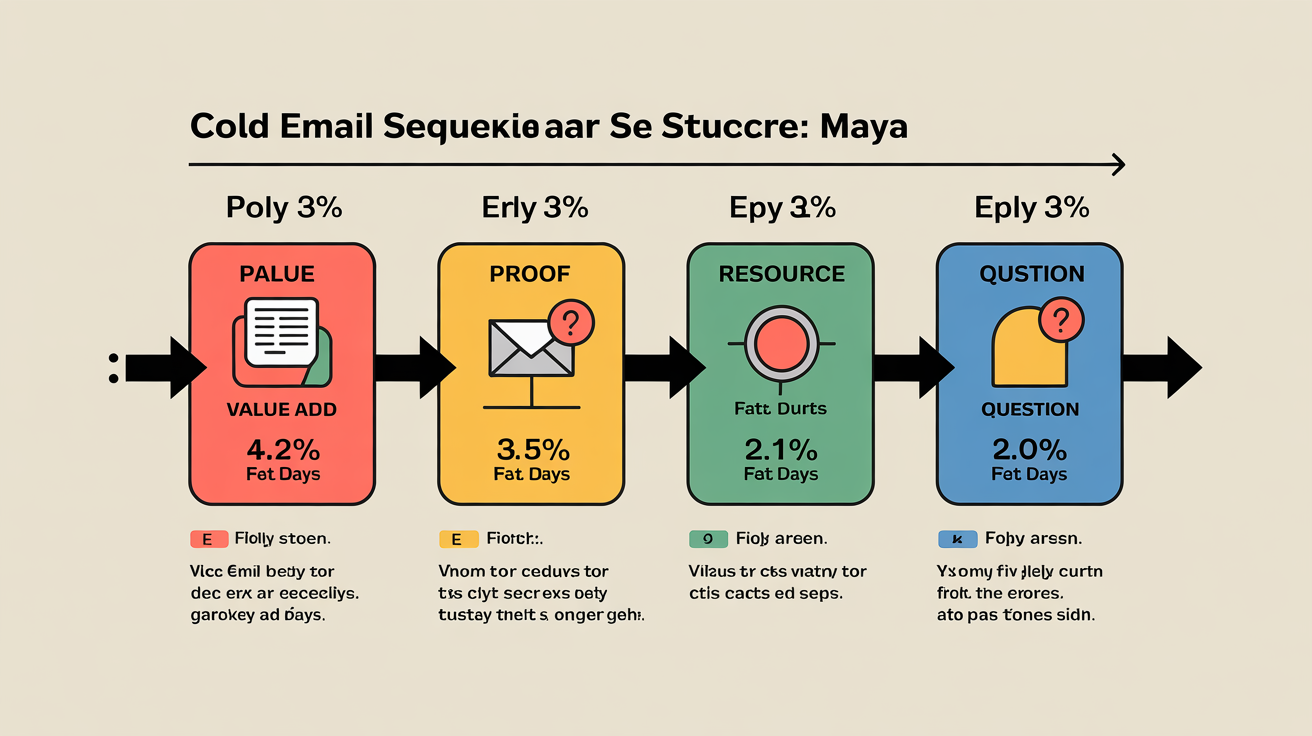
Engineering Serendipity: The Cold Email Sequence and Testing System Behind the Breakthrough
Spraying out applications gets you ignored. Maya shifted to a methodical, research-driven sequence - four targeted emails over two weeks, each with a distinct angle and tracked results. The core shift: persistence, not hope. Every message built on the last and every test drove the next move.
Building a Four-Touch, Research-Driven Sequence
One message, then silence? No chance. Maya mapped four emails: day 1, day 3, day 7, day 14. This spacing keeps you visible without overwhelming anyone. Research shows 4–7 touches triple reply rates - jumping from 9% to over 23% compared to single emails. Too few, you vanish. Too many, you’re blocked or reported.
Each message brought something new. First: a relevant opener tied to the recipient’s world. Second: proof - maybe a case study or measurable result. Third: reframed the pitch, addressed a likely objection, or asked a fresh question. Fourth: a practical resource or a low-pressure, open-ended close. No guilt. No desperation. This matches the strategy in Designing Follow-Up Sequences That Reclaim Lost Opportunities: always add value, never repeat. If nothing new, skip a touch. Better to pause than sound automated.
Testing Subject Lines, Timing, and Angles
Every touchpoint got split-tested. Two subject line styles: one personal, one curiosity-driven. Calls to action varied - some short and direct, others rich with context and value. Maya tracked opens, replies, positive responses. If a subject line drew opens but no replies, she rewrote the body. If an angle fell flat, she swapped it next round. The system ran on feedback, not autopilot.
Timing flexed. If replies slowed, she tightened the gaps. Unsubscribes? She stretched the window or paused. The sequence never looked like a generic sales cadence. Every tweak mirrored how we measure outreach performance: let real data drive the next step.
Optimizing for Personalization and Deliverability
Every message referenced a detail from the hiring manager’s world - a product launch, industry shift, or shared connection. Personalization first, automation second. She kept just enough automation for consistency, but every email felt hand-written. Most outreach dies from obvious templates, not weak pitches. The approach in the hidden job opportunities that move fast backs this up: relevance beats scale every time.
Deliverability got equal attention. Minimal attachments, simple formatting, no spammy words. Sender reputation monitored. If a domain slipped, she switched to a fresh one and cleaned her list. Each email was a single shot to sound human, not like outreach software.
Results: Persistence Paired with Real-Time Optimization
Reply rates jumped after email two and kept rising through touch four. Most interviews and conversations started after the third follow-up, not the first cold touch. The system worked by testing, measuring, and iterating. When something landed, she doubled down. When replies faded, she reworked the next batch. Proactive, data-led outreach flips the usual “apply and wait” pattern. It starts real conversations.
Want to see how replies turn into conversations? Start with how we coach replies into real conversations and build up from there. Volume and luck don’t drive results - showing up, testing, and making every message count does.
Ready for the next tactical layer? Check out our framework for writing short, confident messages hiring managers will read or go deeper with how to scale personalized outreach without losing the human touch.
30 Days, 4 Interviews: Tracking the Real Numbers (And What Most Candidates Overlook)
In 30 days, Maya’s job search stats reversed. She went from 0 interviews after 40+ job board applications to landing 4 interviews - 3 for roles that were never posted. The change? Direct, targeted outreach tracked in real time. Replies logged, conversion rates calculated. Same effort, but the process shifted from guesswork to measurement.
- Job Board Applications to Interviews: Before: 40+ applications, 0 interviews. After: 13 targeted outreach emails, 4 interviews - a 31% interview rate.
- Reply Rate by Touch: 1st email: 4.2%. 2nd: 3.5%. 3rd: 2.1%. 4th: 2.0%. Cumulative: 11.8%.
- Positive Reply Conversion: 50% of replies led to interviews - well above the 2–5% typical for most job seekers.
- Hidden Market Penetration: 75% of interviews came from roles never advertised publicly.
- Benchmark Comparison: Standard cold outreach reply rates average 3.4%. Maya’s sequence hit nearly 3x that with personalization and precise targeting.
- Sequence Impact: 58% of replies came from follow-ups - not the first email. Most candidates never send more than one.
What drives these numbers? The hidden job market is real - 70–85% of roles aren’t listed online. Maya’s old approach put her in a 250+ applicant pile for only a fraction of the market. Targeted outreach bypassed that crowd. Each follow-up referenced something current or specific, not a recycled template. Reply rates nearly tripled the benchmark for generic cold outreach. Directness and relevance cut through noise.
This method runs on tight tracking and iteration. Each touchpoint was measured using the system in how we measure outreach performance and run tests that improve reply rates. When a follow-up outperformed the first touch, its subject line or opener set the new standard. If reply quality dropped, the sequence changed. No luck, no spray-and-pray. Just continuous, data-backed refinement.
Not everything improved. Some replies were quick rejections, and one promising thread died after the second interview. Volume stayed low on purpose, but a few targets never answered, no matter how personal the message. Results came in bursts - one week busy, the next quiet. That's normal. Consistency and fast feedback loops mattered more than smooth, steady progress. For tactics that turn replies into real conversations, see how we coach replies into real conversations and build on strategies from the hidden job opportunities that move fast.
Ready to tighten your own outreach? Compare tactics with Designing Follow-Up Sequences That Reclaim Lost Opportunities or get detailed with What Counts As A Qualified Reply? How To Prioritize Responses for quality-focused tracking.
Takeaways You Can Steal: 5 Tactical Lessons for Job Changers (That Most Miss)
Most replies don’t land after your first message. Nearly 60% show up after the second or third touch. One-and-done outreach misses the bulk of your chances. If you aren’t running a four-touch sequence, you’re leaving replies - and interviews - on the table.
1. Four-Touch Sequences Outperform Single Emails
Quitting after one ignored email is why most job searches stall. Data shows the first follow-up bumps reply rates by 21%, the second by another 25%. Maya’s interviews only started after her third and fourth messages. Treat outreach as a series, not a single shot. Schedule four touchpoints, spaced 2–5 days apart. This rhythm puts you ahead of the 80% who never follow up. The hidden job market responds to persistence, not random luck.
2. Every Follow-Up Must Add Value - No “Just Checking In”
Repeating the same ask or sending “Just checking in” gets you ignored. Each follow-up needs a fresh angle or real value. Maya’s best results came when she included a case study, posed a new question about company goals, or shared an industry insight. Those triggered replies. Polite reminders didn’t. To keep your follow-ups sharp:
- Reference a recent company announcement that links to your pitch.
- Share a quick success story or proof point not in your first note.
- Ask a new question about their team or priorities.
- Offer a resource or article that solves one of their problems - no ask attached.
- Change your angle: if your first email was “Why you should hire me,” try “What I noticed about your product launch.”
No value to add? Don’t send another message. Every follow-up should earn its place.
3. Track Metrics for Each Touch and Adjust Fast
Guesswork wastes time. Maya tracked open rates, replies, and which email triggered interviews. When her second message fell flat, she changed the subject line and trimmed her copy. Replies increased. Track which follow-ups bring responses or interviews - double down on those. Want a more detailed system? Adapt the process in how we measure outreach performance and run tests that improve reply rates for your own outreach.
4. Switch Up Subject Lines to Boost Opens
Recycling the same subject line leaves you stuck with your first impression. Maya saw her open rates jump when she referenced a company event in one subject, then posed a question in another. If you’re being ignored after two touches, change your subject line. Go for context, curiosity, or relevance. Small tweaks can push your open rates past the usual 25–30% for job-seeking emails.
5. Data and Persistence Win - Hope Doesn’t
Hope isn’t a strategy. The job market rewards people who combine polite persistence with smart, data-driven tweaks. Maya’s sequence relied on tracking and rapid adjustment. She dropped what didn’t work, kept a four-touch rhythm, and never wasted a follow-up on a hollow “just checking in.” If you want more replies and real conversations, borrow frameworks from how we coach replies into real conversations or tighten your sequence using Designing Follow-Up Sequences That Reclaim Lost Opportunities.
Don’t bank on luck or hustle alone. Results come from methodical outreach and relentless, thoughtful follow-up. For a complete proactive approach, start with the hidden job opportunities that move fast and build your sequence around process, not chance.
The Headline: Stop Waiting - Start Controlling Your Job Search Results
Cold outreach, run as a system, flips your job search. No more hoping for a reply. Maya used this approach and turned a single opening into four interviews in a month. No inside track. No luck. Just a repeatable, data-driven process anyone can follow.
Two things made the difference. Value in every message - show what you bring, don’t just ask. And iteration: track what lands, test subject lines, adjust your sequence. That’s how you move from guessing to actual results. Proof? Check how turning cold replies into real conversations and surfacing hidden roles drive outcomes others miss.
The job market moves for those who build a process, not those who wait. Want to go from ignored to in-demand? Set up a system that tracks, adapts, and doubles down. That’s the One Cold Email method - your shortcut to a job search you control.
Build an Unfair Advantage Proactively and Update Your Job Search Strategy to Today's Job Market.
$197
Learn MoreFrequently Asked Questions
What are 3–5 high-converting cold email subject lines for career changers targeting hiring managers at mid-size SaaS companies?
High-converting subject lines: "Ex‑PM → Product - saw your Series B"; "Career change: Sales → CS - hiring surge at [Company]?"; "Interested in Product Ops after your new VP of Product"; "Switching to DevRel - noticed you adopted [Tech]"; "Re: reducing onboarding churn at [Company] - ex‑PM ready to help". Personalize the bracketed bits and use the subject that matches a recent, specific signal (funding, leadership hire, hiring surge, tech change) within the last 30 days.
How can I find direct email addresses or the correct hiring/contact person at a 200–1,000 employee SaaS company without paid tools?
Identify the right person first: use the company LinkedIn page (People → filter by titles like “Hiring Manager,” “VP Engineering,” “Head of People/Recruiting”), plus the company’s Careers/About/press/team pages and job listings to surface the actual name. Find or infer their email by Google dorks (e.g., site:company.com "@company.com" or site:github.com "@company.com"), by scanning PDFs/press releases/author bios, and by deriving common patterns (first.last@, first@, f.last@) then test with a free MX lookup and a quick verification (or send a short intro email). If email verification fails, use LinkedIn connection/InMail, Twitter/X DM, the company contact form, or ask a 2nd‑degree connection for an introduction to the hiring contact.
What exactly should I write in my first reply to a cold response to convert it into a scheduled interview (short template or bullets)?
Yes - I’m interested in a 20–30 minute conversation to discuss the [Role] and how my [X years] in [domain] (e.g., led a cross‑functional team that increased revenue by 25%) fits. I’m available Tue Apr 14 10:00–10:30 AM ET or Thu Apr 16 2:00–2:30 PM ET, or you can pick any time on my calendar: [calendar link]. What’s the interview format and who will be on the call so I can prepare?
How many follow-up messages should I send if I get no reply, and what timing and wording typically improve response rates?
Send 4–6 follow-ups total over 2–3 weeks, with a polite break-up on the final touch (research shows ~80% of sales require at least five touches). Timing: send the first follow-up 2–4 days after your initial message, then every 3–7 days thereafter (most replies come in the first two days, but reply rates compound across the first 3–4 touches). Wording: keep messages very short, personalize (≈32.7% better response), add a new value or angle each time (social proof, one-sentence case study, or useful resource), include one clear CTA, and make the last email a low‑pressure “I’ll stop reaching out” break-up to often trigger a reply.
How can I compress my transferable skills into a 2–3 sentence pitch that convinces a hiring manager to take a call?
Use this two-sentence formula: (A) one-line hook - your role + 1–2 transferable skills + a measurable impact; (B) one-line value statement - how those skills solve a problem for the hiring manager and a clear ask for a short call. Example: "As a project manager who led three year‑long technology transitions for national nonprofits, I used stakeholder management and process design to increase adoption and cut onboarding time ~20%; I’d love to discuss how that change‑management experience could help [Company] - do you have 15 minutes next week?"
Which metrics and conversion benchmarks should I track during a 30-day outreach campaign to judge effectiveness (response rate, reply-to-interview rate, etc.)?
Track deliverability (bounce rate), open rate, response/reply rate, response→qualified or meeting-scheduled rate, meeting show rate, qualified→opportunity (demo/interview) conversion, closed‑won, CTR on links, and cold-call reach. Benchmarks: bounce <3%; industry response-rate targets per your research - SaaS/Tech 8–12%, Professional Services 10–15%, Manufacturing 5–8%, Healthcare 6–10%, Finance 7–11%; by company size - Enterprise 4–6%, Mid‑market 8–12%, SMB 10–15%. Operational targets: convert ≥50% of highly qualified responders to meetings/opportunities (under 50% is a red flag), keep meeting show rates well above 50% (50% signals a problem), and aim for cold-call reach ~40–50%; continuously A/B test subject lines/timing and fix deliverability to improve outcomes.
What outreach tools, templates, or lightweight CRM workflows are recommended to scale personalized cold outreach without sounding spammy?
Use an email-deliverability stack (Hunter/ZeroBounce/NeverBounce to verify; Warmup Inbox or Mailgun warm-up; SPF/DKIM/DMARC) + a personalization-enabled sequencer (Lemlist, Woodpecker, Mailshake or Reply.io) and a lightweight CRM (HubSpot Free, Streak for Gmail, or an Airtable base synced via Zapier). Use short, signal-driven templates: subject <6 words with a trigger, 1–2 line personalized opener (recent blog/funding/mutual), one-sentence value prop with a concrete metric, and a single soft CTA. Workflow: verify before send, warm your domain, run 4–6 touches over 2–3 weeks with automated conditional follow-ups and one manual personalize-per-50 messages, limit links/images and track deliverability/open/reply/meeting rates while A/B testing subject/openers to stay human, not spammy.
Luis Gamardo built a modern job search framework for a broken recruiting system. His approach teaches how to send cold emails at every stage of the hiring process, so qualified candidates can get noticed by the right people at the right time - including before jobs are even posted.
Sources
- scale.jobs
- lightercapital.com
- close.com
- leadcrm.io
- trykondo.com
- criminallyprolific.com
- woodpecker.co
- sopro.io
- quora.com
- quora.com
- tario.ai
- mailreach.co
- forbes.com
- hitratesolutions.com
- trykondo.com
- scale.jobs
- metaview.ai
- smartbrief.com
- finance.yahoo.com
- chenected.aiche.org
- linkedhelper.com
- thehub.app
- workology.com
- npr.org
- resumly.ai
- tealhq.com
- scale.jobs
- fpcnational.com
- dunhillstaff.com
- eddy.com
- ivyexec.com
- herohunt.ai
- forbes.com
- additionsolutions.co.uk
- studentcircus.com
- openarc.net
- careeronestop.org
- thehub.io
- fittedforwork.org
- listkit.io
- koncert.com
- cleverly.co
- hubsell.com
- payproglobal.com
- 2pointagency.com
- instantly.ai
- salesmotion.io
- boostmediagroup.com
- onurgenc.com
- listkit.io
- superhumanprospecting.com
- allegrow.co
- autobound.ai
- saleshandy.com
- growthlist.co
- leadspicker.com
- close.com
- artemisleads.com
- lockedinai.com
- isazeni.com
- remote4africa.com
- herohunt.ai
- community.hubspot.com
- fyxer.com
- askamanager.org
- instantly.ai
- expandi.io
- artisan.co
- quora.com
- mailforge.ai
- instantly.ai
- lemlist.com
- scale.jobs
- woodpecker.co
- warmforge.ai
- scribbl.co
- skrapp.io
- chatterworks.com
- hunter.io
- juicebox.ai
- instantly.ai
- indeed.com
- quora.com
- forbes.com
- instantly.ai
- donemaker.com
- eztrackr.app
- writemail.ai
- hirebee.ai
- gmass.co
- nureply.com
- findem.ai
- roojet.com
- siliconrepublic.com
- seekout.com
- hunter.io
- freelancecake.com
- nicksingh.com


