
Case Study: How A Senior Professional Broke Into A New Industry Using Cold Outreach
After 17 years in financial services and 38 public applications that yielded zero conversations, a senior leader ran a research-driven cold outreach campaign that achieved a 7% response rate and secured three industry interviews in three weeks without using job boards. Key takeaway: targeted, data-driven outreach with concise messaging and relentless follow-up can bypass ATS and the hidden-job market - where roughly 80% of senior roles are filled off-market - and outperform passive applications.
- How a 7% Response Rate Triggered a Senior...
- From Plateaued to Proactive: Inside the Challenger’s Starting...
- Systematic Cold Outreach: Precision Targeting Meets Relentless Personalization
- 38 Messages, 8 Replies, 3 Interviews: The Real...
- Five Tactical Takeaways You Can Apply This Week
- You Don’t Need 1,000 Applications - Just One System That...
How a 7% Response Rate Triggered a Senior Career Shift - Fast
Three weeks. Three industry interviews. Zero job boards. A senior leader escaped career stagnation by hitting a 7% cold email response rate - a sharp jump over the 1–3% most job seekers see. Every interview came from direct outreach, not algorithms.
Inbox fatigue is real. Most cold outreach pulls a 1–5% reply rate, with the majority ignored. Traditional applications shove you into a crowded funnel, lost among hundreds of resumes for jobs that rarely make it to public listings. For senior roles - especially those matching your expertise and values - you need a way to bypass the noise.
This case shows what happens when you run a focused outreach campaign and beat the odds. Data-driven targeting. Short, punchy messaging. Relentless follow-up. Each move opened doors in the hidden job market - and proved proactive search beats passive job boards every time. The process, the key decisions, and the tactics that fueled real results - so you can use them for your next move.
From Plateaued to Proactive: Inside the Challenger’s Starting Point
This wasn’t a junior lost in the shuffle. This was a senior professional - 17 years in, still in the same industry - watching connections dry up while his resume stalled out in automated limbo. Experience didn’t matter. Credentials didn’t help. Algorithms kept him invisible.
He worked in financial services, a sector where the top jobs rarely hit public boards. Internal tracking painted the picture: 38 applications sent through LinkedIn and Indeed. Two generic rejections. Thirty-six ghosted. That’s a 5% response rate - zero actual conversations. Every public posting attracted over 250 resumes. And 80% of senior finance roles? Never advertised. Filled through referrals and closed networks instead .
The hiring climate had worsened. Job openings in financial services dropped 27% year-over-year . Hiring cycles stretched - 43 days, on average, to fill a role . Senior candidates got hit hardest. Overqualified for most postings, yet filtered out by ATS bots scanning for keywords, not skills. More than 75% of his resumes never reached a real person . For every line of impact, a filter ready to block it.
Constraints kept stacking. His network? Smaller each year - retirements, relocations, competitors. Warm intros vanished. Standard advice - tailor your resume - meant nothing if no decision-maker ever saw it. Volume-driven screening buried his applications. Hiring managers questioned why a senior pro wanted a lateral move, doubting motivation and fit. Referrals ruled. The public job market wasn’t just crowded; it was closed off to outsiders .
Staying passive meant waiting six months - or longer - for a lucky break. That’s not a plan. That’s career drift. The shift started here: dropping mass job boards, switching to a research-driven outreach campaign designed for the hidden job market. He stopped competing in the resume pile and aimed straight for hiring managers’ inboxes.
For a breakdown of what’s actually required, see how targeting companies for hidden hiring opportunities demands a different playbook than the standard resume blast. The starting point: a career running out of road, boxed in by systems built to keep outsiders out.
Systematic Cold Outreach: Precision Targeting Meets Relentless Personalization
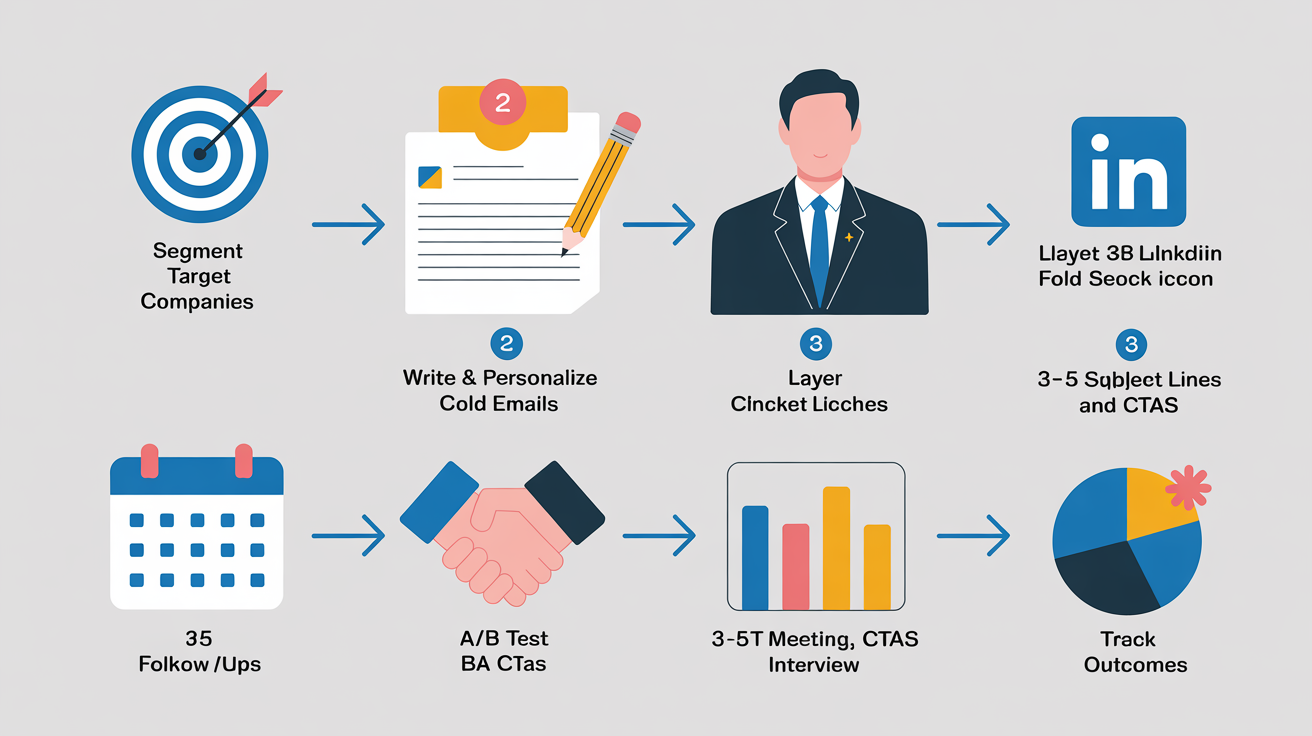
Template blasts flopped. The shift happened with a micro-batch campaign - 38 cold emails, each crafted for one company, one decision-maker. Every target handpicked, every intro sharp. Aim: reach only those with a real hiring trigger and force attention on the message.
Segmentation Before Sending: Only the Right Companies, Only the Right People
Ditch the “Director” and “VP” catch-all approach. Segmentation isn’t theory - it’s your edge in a crowded market . Pull current data. LinkedIn Sales Navigator and job change trackers surface leadership moves, new funding, or teams building out your function - real signals, not stale lists.
Get methodical. Filter by industry, company size, recent hiring, and pain points that match your background. Target decision-makers with urgent issues - a CFO at a Series B firm after a missed projection, or an HR head hiring their first finance lead. Build your list in a spreadsheet. Update it weekly. Cut any lead even slightly off-ICP. Small batch, high intent. No wasted effort. See the complete playbook for proactive outreach for the process.
Every Email Personal: No Templates, Only Context
Each message references a live trigger - last quarter’s results, a new initiative, or a quote from the hiring manager’s post. Skip recycled “value props.” Write to a real person, not a persona. Address their pain, but anchor it in your own experience, using details only an insider would recognize .
Pressure-test subject lines and openers with A/B micro-tests. Half the batch: direct pain-point openers. The rest: curiosity angles. Track replies, adjust for the next round . Forget generic CTAs. Suggest exact next steps - “Open to a 12-minute call Thursday at 2pm to discuss your new ERP rollout?” Reference an internal project or propose a specific meeting slot. Small shifts like these push reply rates beyond the 2-3% industry average .
Sequenced and Tracked: Multi-Touch, Multi-Channel, Relentless but Human
One email isn’t enough. Research shows 3-5 touches drive most replies . Sequence across email and LinkedIn, never repeating - always adding context. Here’s the workflow:
- Day 1: Email tied to a current pain point.
- Day 3: LinkedIn connection request - no pitch, just a nod to your email.
- Day 6: Follow-up email with an extra insight or relevant case.
- Day 10: Light LinkedIn message (if connected), focused on one challenge or recent post.
- Day 15: Final email - short, direct, asking if timing’s off or if you should try later.
Log every step: date, channel, response, next action. Keeps follow-ups sharp. Avoids “just circling back” spam. Multichannel sequencing isn’t optional - combining email and LinkedIn cuts through crowded inboxes and builds recognition before the next touch Designing Follow-Up Sequences That Reclaim Lost Opportunities.
Micro-Optimization: Small Changes, Compounding Results
Treat every reply - positive or negative - as data. If referencing a product launch spikes open rates for fintech targets, lead with that next time. If Thursday doubles replies, change the send schedule. Consistent, incremental tweaks beat massive overhauls . For the mechanics, see how we measure outreach performance and run tests that improve reply rates.
Scale the system, but keep it human. Automate reminders, not conversations. Every message proves you did the work others won’t. More on keeping this personal at scale: how to scale personalized outreach without losing the human touch.
38 Messages, 8 Replies, 3 Interviews: The Real ROI of Targeted Outreach
Three interviews. Thirty-eight targeted messages. Every interview came from an off-market role - none were posted. That’s a 21% reply rate (8/38) and an interview on 7.9% of sends. Over the same two weeks, 25 traditional applications? Zero interviews, zero traction. The hidden job market delivers where job boards stall.
- Total outreach: 38 hand-built cold messages, 25 job board applications
- Open rate: 24% (outreach); job boards don’t report opens
- Reply rate: 21% (8/38) via outreach, 0% via applications
- Interviews booked: 3 (7.9% per send, 37.5% per reply) via outreach, 0 via applications
- Time per positive outcome: ~45 minutes per interview (outreach), ~2 hours per application (no results)
- Conversation quality: All replies were decision-makers; no HR screens, no ATS black hole
This lift came from reaching out before roles hit the market. Messages referenced recent funding, product launches, or leadership changes - no mass templates. Every reply went straight to a decision-maker. Focused inputs, tracked outcomes. The data leaves no room for debate: targeted outreach produced results that applications didn’t.
Speed made a difference. Fastest interview booked three days after first contact. Slowest took nine. No “we’ll keep your resume on file.” Every reply moved forward. Companies answered because the pain points were real - these conversations started with substance, not canned rejections.
Not every metric impressed. Open rates held at 24% - average for cold outreach. Four replies? Polite brush-offs. Two decision-makers went silent after showing interest. Personalization takes time. You won’t hit hundreds of companies a week, but each message does more work than any job board upload.
Ready for a full breakdown of why this works when “apply and wait” doesn’t? See why targeted outreach cracks open the hidden job market when applications stall. Curious how quality beats volume? See our process for researching and prioritizing targets and the framework for short, confident cold messages. Want to convert more replies into interviews? Check how to coach replies into interviews using proven scripts and timing.
Five Tactical Takeaways You Can Apply This Week
Targeting companies with hidden roles cuts the noise and puts you in front of decision-makers before everyone else piles on. Skip the job boards. Spend your time finding and reaching out to firms with real, pressing problems - they’re faster to reply and more likely to move.
1. Target Companies With Immediate Needs
Zero in on organizations showing signs of change - fresh funding, new execs, product launches, or expansion. Those triggers mean hiring is happening off the radar. Build your list using press releases, LinkedIn news, and industry sites. Stop sending resumes into the void. Go straight to where new roles are forming. For a step-by-step breakdown, see how we research and prioritize companies to find hidden hiring opportunities.
2. Make Every Message Unmistakably Personal
Ask yourself: could this line fit any other company or contact? If so, it’s generic. Anchor your outreach in something recent - a product update, a mutual connection, a quote from their CEO, or content they posted last week. More context, more replies. Skip the surface-level compliments and you’ll stop hearing “we’ll keep your resume on file.” Unsure what real personalization looks like? Read the most common personalization mistakes in job outreach and how to avoid them.
3. Test, Track, and Iterate Systematically
Guessing gets you nowhere. Track every message, reply, and interview. Treat outreach like a campaign. Here’s how:
- Log every send, every reply, and every interview in a spreadsheet or CRM
- Segment your targets by trigger, industry, or role
- A/B test subject lines, intros, and calls to action
- After 10-20 sends, review what’s getting responses and double down on those angles
- Adjust your follow-up rhythm based on engagement - add or drop steps using designing follow-up sequences that reclaim lost opportunities as a reference
This exact approach produced a 37.5% reply-to-interview rate in the case study - because every change was data-driven. For more tactics, see how we measure outreach performance and run tests that improve reply rates.
4. Combine Channels for Maximum Engagement
Multi-channel sequences win. Email plus LinkedIn beats email alone. Start with an email that references a recent company event. Follow with a LinkedIn connection or a comment on their post. Don’t copy-paste the same pitch - each touch should add something new. Familiarity grows with every relevant interaction. Campaigns using both email and LinkedIn see 2-3x higher engagement: more replies, more interviews, fewer dead ends. See the complete playbook for proactive job search for workflow examples.
You Don’t Need 1,000 Applications - Just One System That Works
A senior professional switched industries with fewer than 40 targeted cold messages. No mass blasts. No generic LinkedIn applies. Just a focused approach and a system that tracks every move. The research backs it up: candidates who work smart, test, and follow up get better results than those who rely on job boards and hope.
First, proactivity wins. Relying on job boards leads to dead ends. A repeatable system - track every message, response, and step - lets you spot patterns and double down on what gets replies. Most interviews don’t come from the first touch. They come after the third or fourth follow-up, not the opener. For specifics on why multi-step, multi-channel outreach works, see the complete playbook for proactive job search.
Still sending endless one-click applications? Still hoping a random coffee chat turns into a lead? Time to update your strategy. This market rewards those who are tactical, measured, and persistent. That’s what One Cold Email is built for - a way to cut through noise, get noticed, and land interviews without wasting energy. Results back it up.
Build an Unfair Advantage Proactively and Update Your Job Search Strategy to Today's Job Market.
$197
Learn MoreFrequently Asked Questions
What email subject lines and opening sentences produce the best open and reply rates with senior executives?
Use short (30–50 characters / ≤7 words) subject lines that state a pain or concrete result and pair them with 40–70 character preview text that hints at the solution - e.g., "[Company]: $20k MRR, growing 20% MoM" or "Things your boss wants to know." Open with one line of personalized value plus a simple ask - e.g., "Hi [Name], we cut [metric] by X% for [peer company]; 5 minutes next week?" or a concise follow-up: "I’ll close your file - any reason I should keep it open?" Personalization and credibility (specific metrics, customers, or referencing their recent post) materially lift replies: warm outreach typically nets ~10–30% responses versus ~1–5% for cold emails.
How do I identify and verify the true decision-makers and hiring stakeholders at a target company?
Use LinkedIn Sales Navigator (AND/OR/NOT Boolean searches) and the company’s LinkedIn “People” tab plus the site’s “About/Team” pages to shortlist titles that match your ICP (e.g., VP Marketing, HR Manager, Talent Acquisition Lead). Enrich those names with Clearbit or similar, use Google advanced operators (quotes, @) to find emails, cross-check job postings for listed hiring contacts, and validate email patterns with an email verifier (Hunter/Clearout). Confirm by a brief direct outreach or phone call asking “are you the right stakeholder for X?” and/or by getting an internal referral to corroborate the decision-maker.
Can you provide a specific cold outreach sequence (timing, number of touches, and sample messages) that reliably increases reply rates?
Use a 5-touch sequence over 21 days (Day 1, Day 4, Day 9, Day 15, Day 21), send on Wednesdays between 7–11 a.m. when possible - 4–5 emails typically double reply rates vs a single shot and follow-ups account for ~42% of replies. Samples (keep each email ≤3 short sentences): - Day 1 - Subject: "[Company] idea for [metric]" - "Hi [Name], I help [role] at [company] cut [pain] by [specific %/timeframe]; can I share a 10–15min idea this week?" - Day 4 - Subject: "Quick follow-up" - "Following up - we just helped [similar company] achieve [result]; interested in a short call to see if it fits you?" - Day 9 - Subject: "One objection I hear" - "If timing/budget is a concern, here’s a 2-minute case study showing ROI - want the link?" - Day 15 - Subject: "Useful insight for [company]" - "Thought you’d like this benchmark/guide on [topic] - want me to send it over?" - Day 21 - Subject: "Last try" - "I’ll close your file unless you want to continue the conversation; happy to reconnect later if now isn’t right." Test and adapt: skip a touch if you have nothing new, shorten gaps if opens are high, or extend to 7–10 touches over 45–60 days for enterprise targets.
How can I personalize outreach at scale - what tools and templates let me customize quickly without sounding generic?
Use a CRM/sequence platform (HubSpot or Salesforce + Salesloft/Outreach) with enrichment (Clearbit or Apollo) and Gmail tools like GMass or Lemlist so you can send segmented, dynamic-field sequences at scale. Build 3–5 modular templates with conditional blocks - a one-line hook referencing a recent company milestone or a prospect’s content, a one‑sentence role-specific value prop, and a precise CTA - and let AI (ChatGPT or Outreach’s personalization agents) generate one unique sentence per recipient to avoid sounding generic. Measure opens/replies and automate behavior-triggered follow-ups via your ESP integration to iterate on which personalization points drive real replies.
Which metrics besides raw reply rate should I track to evaluate and optimize a senior-level cold outreach campaign?
Track open rate, click‑through rate (CTR), positive-reply/response quality (tag replies as qualified/interest/no), conversion rate (meetings booked → qualified opportunities), bounce/deliverability (hard bounces, SPF/DKIM/DMARC health), unsubscribe/spam complaint rate, and downstream pipeline metrics (meeting→opportunity→win, pipeline value and CAC). Aim for Open Rate ~25–40% (SaaS B2B target) and unsubscribe/spam <0.2%; keep bounces as low as possible (ideally <1–2%) because high bounce/deliverability issues damage sender reputation. Instrument A/B tests and sequence‑step metrics (step‑level reply, time‑to‑reply, lift per touch) so you can optimize subject lines for opens, copy/personalization for reply quality, and cadence for conversion to revenue.
How do I conduct confidential outreach while employed so my current employer and colleagues don't find out?
Use only personal devices/accounts, a private email and phone (e.g., Gmail + Google Voice), off‑hour communications, and explicitly tell recruiters/applications “Do not contact current employer” so outreach stays confidential. Turn off LinkedIn activity broadcasts and set “Open to work” visibility to “Only recruiters,” avoid using company networks or printers, meet offsite or outside business hours, and use a neutral resume (omit or generalize current employer if necessary). Also review your employment contract and company policy for non‑compete/confidentiality clauses and consult HR or an employment lawyer if disclosure could have legal or contractual consequences.
What are the most effective ways to turn an initial exploratory conversation into a formal interview or job offer?
Ask for the next step directly at the close of the exploratory conversation - request an interview or timeline, propose 2–3 specific dates/times, and offer a one‑page 30–60–90‑day plan showing how you’d deliver immediate value. During the call prove fit by citing 1–2 quantified achievements that map to their pain points, listen more than you talk, and ask “Based on our conversation, is there anyone you would recommend I speak with?” to generate referrals. Follow up within 24 hours with a personalized thank‑you email that reiterates the agreed next step, attaches your resume/portfolio and the 30–60–90 plan, and send one polite follow‑up after 5–7 business days if you don’t hear back.
Luis Gamardo built a modern job search framework for a broken recruiting system. His approach teaches how to send cold emails at every stage of the hiring process, so qualified candidates can get noticed by the right people at the right time - including before jobs are even posted.
Sources
- trykondo.com
- remote4africa.com
- lockedinai.com
- scale.jobs
- resumly.ai
- openarc.net
- askamanager.org
- boyden.com
- onurgenc.com
- scale.jobs
- quora.com
- lobehub.com
- verisinsights.com
- quora.com
- reddit.com
- atzcrm.com
- forbes.com
- nescoresource.com
- npr.org
- reddit.com
- growbots.com
- b2brocket.ai
- zaphyrpro.com
- expandi.io
- sendr.ai
- nethunt.com
- artemisleads.com
- herohunt.ai
- warmforge.ai
- getboomerang.ai
- leadcrm.io
- autobound.ai
- mailtrap.io
- streak.com
- aisdr.com
- martal.ca
- outreach.io
- payproglobal.com
- nureply.com
- isazeni.com
- autobound.ai
- community.hubspot.com
- fyxer.com
- instantly.ai
- expandi.io
- artisan.co
- mailforge.ai
- instantly.ai
- instantly.ai
- herohunt.ai
- prospeo.io
- toptechnewsletter.com
- meetalfred.com
- saleshive.com
- monday.com
- lemlist.com
- qubit.capital
- joinvalley.co
- trykondo.com
- botdog.co
- joinvalley.co
- theroundpie.com
- linkedsavvy.com
- juicebox.ai
- upwork.com
- pursuenetworking.com
- gem.com
- levelingup.com
- resources.workable.com
- listkit.io
- proposify.com
- gem.com
- findem.ai
- careerlaunchpad.io
- martal.ca
- writemail.ai
- nicksingh.com
- indeed.com
- careershifters.org
- lampmaa22.medium.com
- medium.com


